Case study
Stayverz
Property, bookings, and finance lived in three tools that never agreed.
The problem
A growing rental business was running property management, guest bookings, and finance in separate systems. Each was individually fine and collectively unusable: the same booking existed three times, in three shapes, and nobody could produce one trustworthy view of occupancy against revenue.
The cost was not the duplication itself. It was that every question worth asking — which properties are actually profitable, where is revenue leaking — required someone to assemble an answer by hand first.
“We wanted a single platform to manage properties, guests, and finances. Everything in one place, with real-time insights we never had before.”
What I did
- 01
Interviewed the people doing the work
Property managers and the finance team, separately — the two described different processes.
- 02
Ran a gap analysis against the platform's modules
Where configuration would do, and where it genuinely would not.
- 03
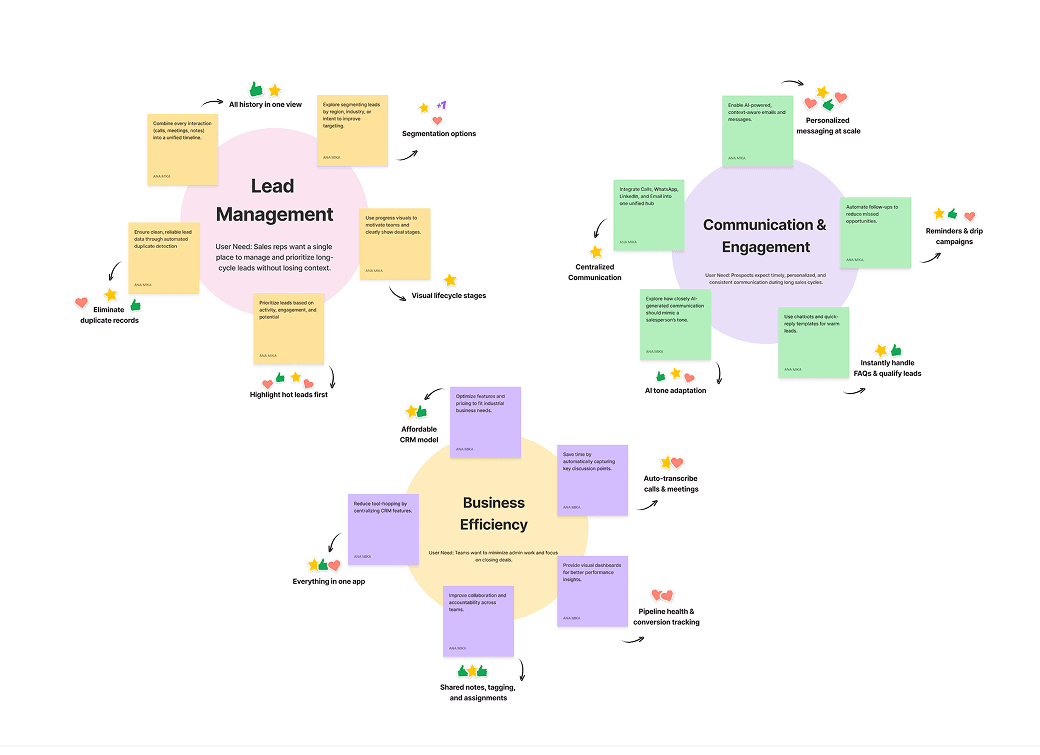
Clustered the findings into themes before designing anything
Affinity mapping, so the build addressed needs rather than requests.
- 04
Configured and unified the operation
Property, booking, and finance operations on one system with a shared source of truth.
From the system
Outcome
TBC
Systems consolidated
TBC
Reporting time saved
TBC
Occupancy visibility
The implementation unified three previously disconnected tools. Quantified outcomes TODO — the client quote above is verified; the numbers are not yet.
Artifacts produced
- Stakeholder interviews
- Gap analysis
- Affinity map
- Wireframes
Next case study
Cafe Laundrette